The Great Chicken - The Ride-Along Program
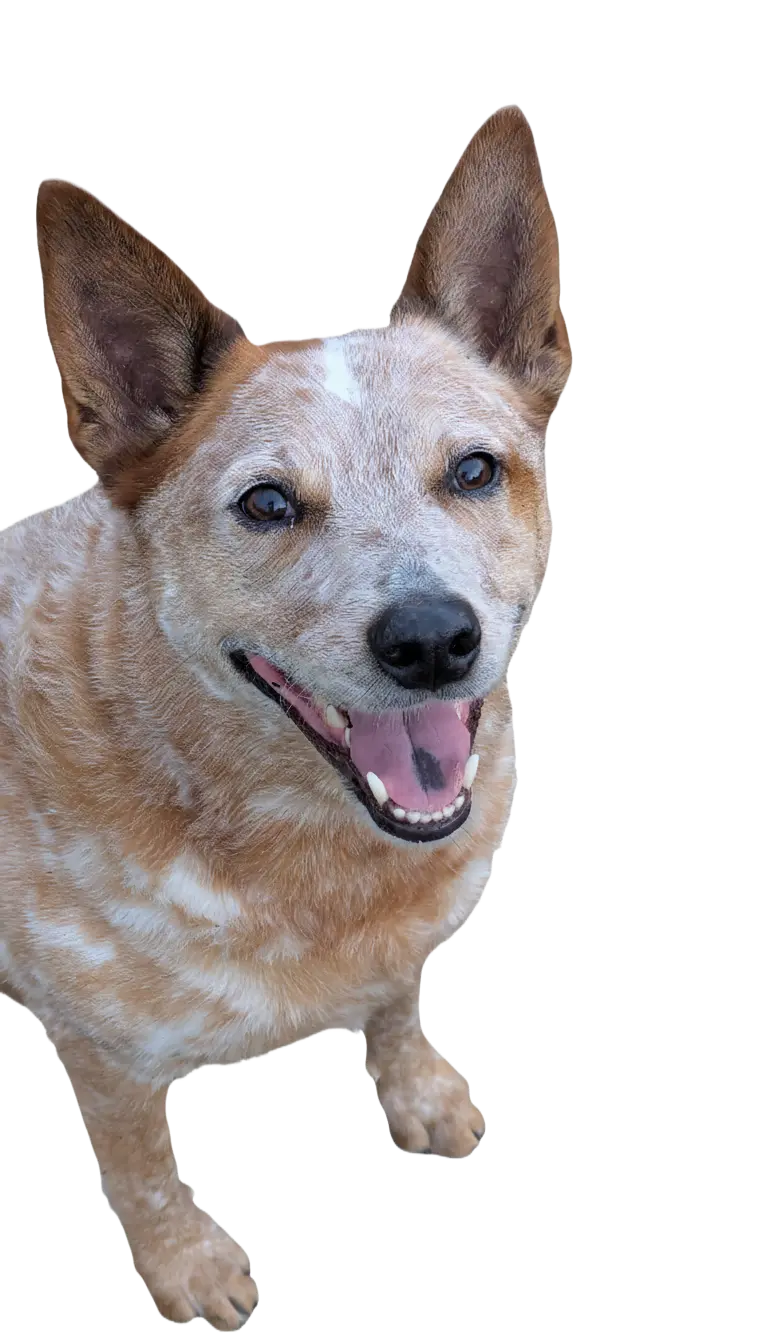
When we aren’t cruising in the "Doghouse on Wheels" toward our next state, I have a massive responsibility back at home base. You might think being a travel dog is all about naps and new smells, but someone has to keep the Rhode Island Reds in line.
I have over 20 chickens under my watch. They are loud, they are feathered, and they are constantly trying to find the best insets. Most dogs might chase them, but I take a completely different approach: The Ride-Along Program.
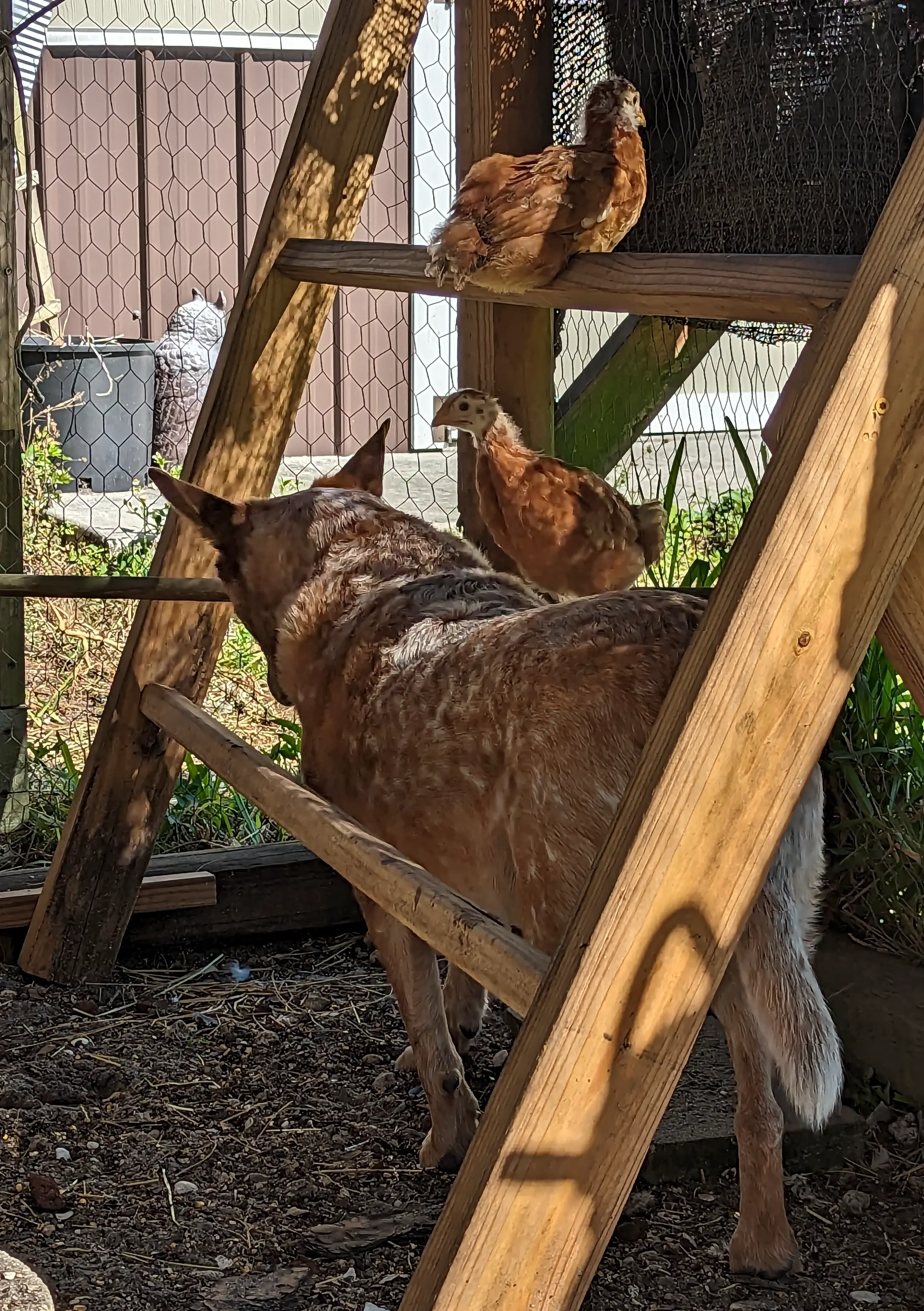
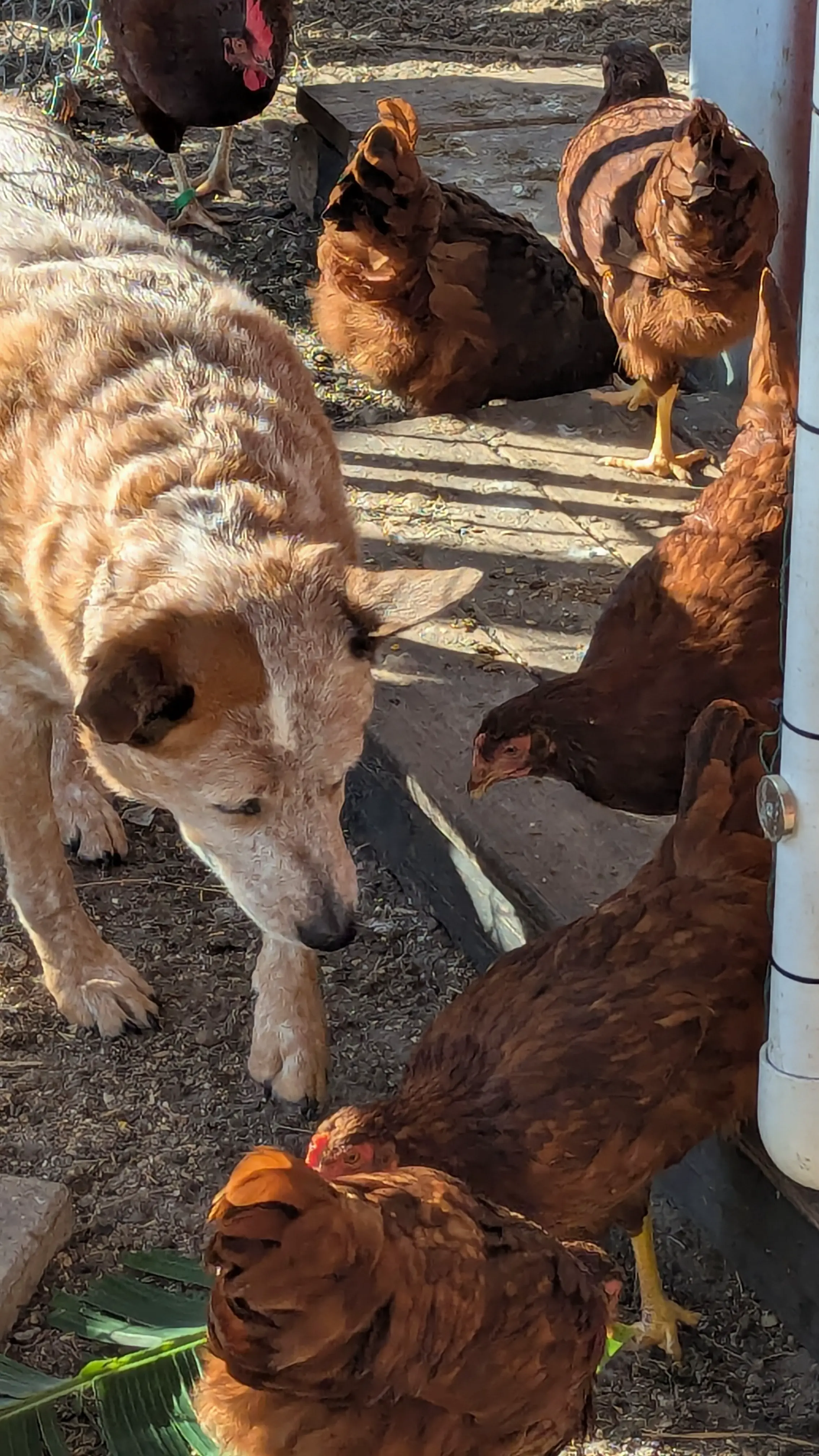
As you can see in the photos, I have to inspect every level of our operation, from the top of the climbing frames down to the dirt.
🧗 Level 1: The "Back-Seat" Coop Tours
To properly oversee the yard, you've got to get on their level—or, in this case, let them get on yours.
During our morning rounds, I check on the younger baby chickens as they test out their climbing skills on the wooden ramp frame. Naturally, they look to their Chief of Security for support. This brave little hen decided that my back was the best vantage point for scouting out snacks!
It takes a lot of patience to stay perfectly still when you have claws digging into your fur, but that’s just part of the job description for a high-level manager. I just keep my ears forward, stand steady, and let her do her recon. No big deal, just standard supervisor things.
🌾 Level 2: Ground-Level Inspections
Once the youngsters have had their tours, it's down to the nitty-gritty. I take ground-level crowd control very seriously.
I make it a point to get right in there, nose-to-beak, to ensure the morning scratch and feeding operations are running without incident. If you watch closely, you have to verify that they are actually eating their feed and forage instead of plotting another breakout.
They are always bustling around my paws, but they know who’s in charge of the perimeter.
📑 "Organizational Management"
My humans say I have "herding instincts," but I call it organizational management. Whether we are at a dog park in a faraway location or right here in the backyard with the Rhode Island Reds, I make sure everyone is exactly where they are supposed to be.
Shadow usually helps by... well, she mostly helps by staying out of the way so I can do the real work. In fact, if you are ever looking for Shadow, don't check the perimeter. Just check the main coop nesting boxes—you will find her in there trying to sneak an egg or two when she thinks I’m not looking!
But don't worry, the Red Heeler is always on duty.
Tail wags and high-level surveillance,
Patches 🐾
🐾 Patches' Home Base Shift Rating:
10/10 for operational control, 9/10 for backseat tour safety (claws could be duller).
Human Notes:
Integrating high-energy herding breeds like Australian Cattle Dogs (Red Heelers) with backyard poultry requires careful training, strong boundary management, and understand of natural behaviors:
-
Understanding "The Drive": Heelers are natural herders, which means their instinct is to eye, stalk, and move animals. It requires extensive socialization from a young age (or careful, leashed training) to transition a dog's high prey drive into gentle, non-destructive "management" or guard behaviors around flighty birds.
-
Coop Setup & Climbing: Ramps and multi-tiered setups (like the wooden climbing ladder seen in the run) are great for giving chickens vertical space to play and roost, but they must be structurally secure to prevent tipping when curious dogs poke their noses in to check on the young birds.
-
Treat Security: Dogs love eggs and chicken feed, but keeping dogs out of nesting areas is critical! Raw eggs are fine in moderation, but a dog raid on a nesting box can disrupt the flock's laying habits and lead to egg-breaking behaviors.

Enjoyed Shadow & Patches' Latest Report?
Was this article helpful?